How Modular Wiring Reduces Project Risk
- jjones677
- Mar 31
- 3 min read

In construction and renovation, a team’s ability to anticipate and plan for potential bottlenecks can determine a project’s success. Today’s landscape brings added pressure, with ongoing uncertainty around fuel costs, supply chains, and economic shifts. As a result, managing risk has become more important than ever. From labor availability to schedule demands and jobsite safety, construction and facility leaders are navigating a growing list of variables that impact outcomes.
As these challenges compound, teams are being asked to do more with less, while still meeting tight timelines and performance expectations. Modular wiring offers a practical way to reduce these risks by shifting much of the work offsite, simplifying installation, and supporting safer, more adaptable electrical systems.
Reducing Risk from Labor Constraints
The shortage of skilled electricians is a long-term challenge that continues to shape how projects are planned and executed. According to industry estimates, the U.S. will need tens of thousands of additional electricians in the coming years to meet demand, putting increasing pressure on project timelines and labor availability. Traditional pipe-and-wire installations require significant time onsite for measuring, cutting, bending, and pulling wire, which can quickly strain available resources.
Modular wiring moves much of that complexity offsite and into a controlled manufacturing environment. With prefabricated, plug-and-play components arriving ready to install, the need for specialized labor onsite is reduced. This allows experienced electricians to focus on higher-value work like service connections and final terminations, rather than repetitive branch wiring.
Keeping Projects on Schedule
In construction, progress often follows a linear sequence, so a delay in one phase can slow everything that follows. Walls and ceilings, for example, may remain open until electrical wiring is complete and inspected, which can push timelines and create frustration for customers.
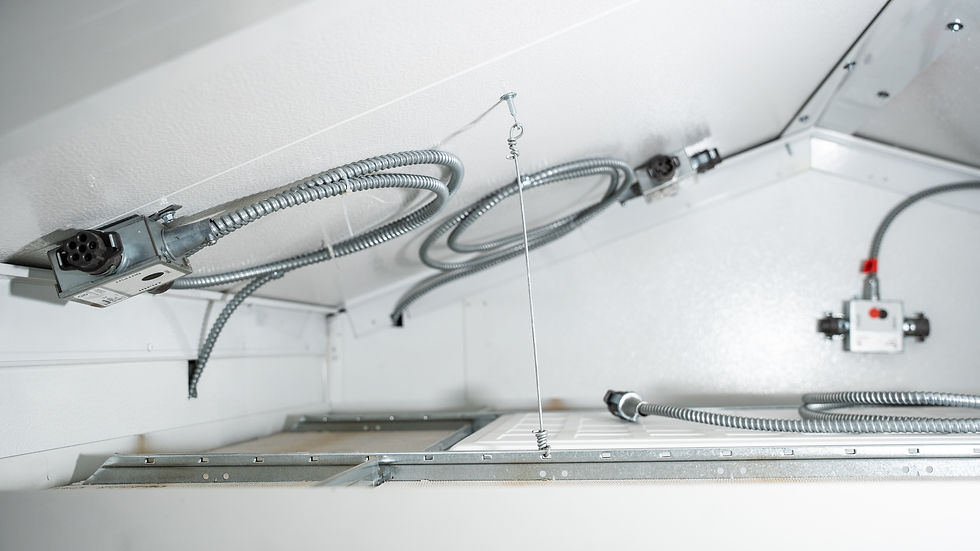
Modular wiring provides a more efficient alternative by supporting parallel progress. While the site is being prepared, wiring assemblies are built and tested in the factory. Once delivered, installation moves significantly faster than traditional methods, helping teams stay on schedule. Factory testing also reduces the likelihood of rework, minimizing disruptions during critical phases of the project.
With Power Built’s UL 183 certified manufactured wiring systems, inspections can also be more streamlined, giving teams greater confidence in both safety and code compliance.
Improving Jobsite Safety and Organization
The more time crews spend on ladders, lifts, or in tight overhead spaces, the greater the potential for accidents. In construction, falls are one of the most common and serious safety risks, especially when work is performed at height.
By reducing time on ladders or lifts, modular wiring helps create a safer working environment. Installation is faster and more straightforward, with fewer tools in use and less material clutter on the floor. Crews spend less time handling heavy wire and performing repetitive overhead work, which can reduce both immediate safety risks and long-term physical strain.
Supporting Long-Term Reliability and Flexibility
Not all risks arise during installation. Long-term performance and the ability to adapt over time are just as critical. While field-built systems can vary in quality depending on installation conditions, modular systems are manufactured and tested in a controlled environment.
Because modular wiring is evaluated under the UL 183 Manufactured Wiring Systems framework, it is tested and certified as a complete assembly, not just a collection of individual components. This helps ensure that connections are properly matched, grounded, and secure, supporting both safety and reliability over time.
Additionally, as facilities evolve, modular wiring can be reconfigured or expanded without starting from scratch. This makes it easier to update layouts without introducing the same level of disruption or labor demand as with traditional retrofits.
A More Predictable Path Forward
Construction projects will always involve uncertainty, but strong planning helps reduce its impact. Modular wiring gives project leaders greater control over labor demands, schedules, safety conditions, and future changes.
Instead of reacting to challenges as they arise, teams can move forward with greater confidence, knowing much of the complexity has already been handled before the materials even arrive onsite.
To learn more about how you can reduce your project risks with Power Built Modular Wiring, please contact our team and we will be happy to answer any questions.


Comments